

Serengeti from the Sky: The Ultimate Guide to Balloon Safaris

There is a moment just before sunrise in the Serengeti when the world is entirely silent. The cool morning air hangs still over the golden grasslands, and the only sound is the low, rhythmic roar of a gas burner. Then, with a gentle lift, the ground begins to recede. Below you, the vast African savanna unfolds in a panoramic display that no land vehicle can ever replicate. This is a Serengeti balloon safari—the ultimate perspective on East Africa’s wild heart, floating silently on air currents.
The Chronology of a Serengeti Balloon Safari
A hot air balloon flight is not just a brief excursion; it is a meticulously orchestrated half-day expedition. Understanding what happens step-by-step helps you prepare for this unforgettable experience.
4:00 AM – The Pre-Dawn Wake-up and Safari Transfer
Your adventure begins in the pitch black. You will receive an early morning wake-up call at your lodge or camp, followed by a quick cup of coffee or tea. A custom-designed transfer vehicle then drives you to the launch site. This early-morning transfer serves as an unexpected night-game drive: under the cover of darkness, you may spot nocturnal hunters like leopards, hyenas, and genets returning from their evening patrol.
5:30 AM – The Inflation and Pre-Flight Briefing
Arriving at the launch field, you are greeted by the dramatic sight of the balloon's envelope lying across the grass. You will watch the crew use massive fans to fill it with cold air before the pilot fires up the burners, casting a bright orange glow against the pre-dawn sky. As the balloon stands upright, your FAA and TCAA-licensed pilot conducts a vital safety briefing, detailing boarding procedures and the landing brace position.
6:15 AM – The Silent Liftoff and Sunrise Flight
As the sun breaks over the eastern horizon, the basket gently leaves the ground. For the next hour, you will drift wherever the wind directs, floating at altitudes ranging from tree-level to over 3,000 feet. This offers a magnificent dual perspective: from high above, you can map the ancient migratory trails crisscrossing the Serengeti plains; at lower altitudes, you drift silently over acacia canopies, observing prides of lions, herds of elephants, and grazing giraffes that remain completely undisturbed by your silent passage.
7:30 AM – The Historical Champagne Toast
Upon landing, the celebration begins. Following a centuries-old tradition, you will toast your flight with a glass of chilled champagne. This custom dates back to 1783 in France, when the Montgolfier brothers launched the first hot air balloons. Local farmers were terrified of these 'fire-breathing dragons' landing in their fields. To prevent them from destroying the balloons with pitchforks, early balloonists carried fine French champagne to share upon landing. Today, this tradition is honored with a bubbly toast in the middle of the African wilderness.
“To float silently over the Serengeti at dawn, and toast the landing with champagne in the middle of the savanna, is to touch the absolute zenith of the safari experience.”
8:00 AM – The Luxury Bush Breakfast
After the toast, you are driven to a scenic outdoor location where a five-star hot English breakfast is served under the shade of a majestic acacia tree. Complete with white linens, fine china, and freshly baked pastries, this bush breakfast is the perfect setting to exchange stories with your fellow travelers before your guide drives you back to your regular game drive.
Critical Logistics: Cost, Seasons, and Booking Strategies
While a balloon safari is one of the most rewarding experiences in Tanzania, it requires careful financial and logistical planning.
How Much Does a Serengeti Balloon Safari Cost?
A hot air balloon safari in the Serengeti typically costs between $550 and $600 USD per person. This price reflects several unavoidable operational costs:
- Aviation Safety & Maintenance: Balloons are registered aircraft subject to rigorous safety inspections, similar to commercial planes.
- Pilot Expertise: Pilots are highly trained commercial aviators with thousands of flight hours and specialized local wind knowledge.
- Conservation Fees: Approximately $40 to $50 of the price is paid directly to Tanzania National Parks (TANAPA) as a conservation fee to support wilderness preservation.
- Remote Logistics: Moving heavy balloons, ground recovery crews, and culinary staff deep into national parks requires massive fuel and equipment coordination every single morning.
Serengeti Flight Zones and the Great Migration Calendar
To maximize your chances of seeing the Great Migration herds from the air, you must coordinate your flight zone with the season:
- Central Serengeti (Seronera): Operates year-round. This region offers superb resident game (predators, hippos, waterbuck) regardless of migration patterns, making it the most reliable year-round option.
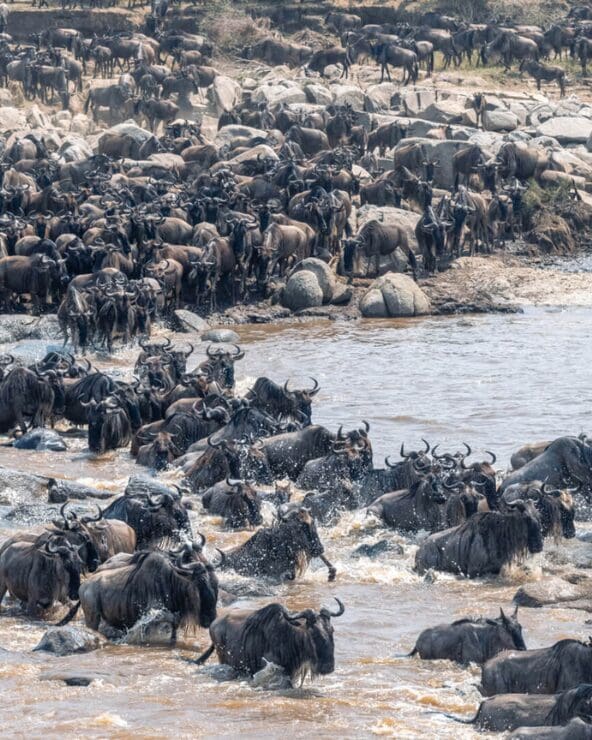
- Northern Serengeti (Kogatende): Best from July to October. Offers a high probability of witnessing wildebeest herds gathered along the Mara River, prepping for dramatic water crossings.
- Southern Serengeti (Ndutu): Best from December to March. Positioned over the short-grass plains during the calving season, when hundreds of thousands of wildebeest calves are born.
- Western Corridor (Grumeti): Best from May to June. Captures the migration as it channels northwards along the Grumeti River.
The Golden Rule: Book Your Flight on Day One
Hot air ballooning is entirely weather-dependent. High winds, heavy rain, or thick fog can ground a flight for safety reasons. Therefore, the golden rule of booking is to schedule your flight for the first morning of your stay in the Serengeti. If your flight is canceled due to weather, you will have one or two backup mornings to reschedule before moving to your next destination. If rescheduling is impossible, you will receive a full refund.
Practical Tips: What to Wear and Who Can Fly
To ensure your flight is comfortable and safe, keep these practical considerations in mind.
What to Wear and Pack
Dress in layers. The temperature at 4:30 AM can be freezing, but it warms up rapidly once the sun rises. We recommend a windproof jacket, long pants, and sturdy closed-toe shoes. Most importantly, wear a brimmed hat: the radiant heat from the balloon’s gas burner directly above the basket can feel quite hot on your head. Finally, ensure your camera or phone has a secure wrist or neck strap—anything dropped from the basket is gone forever.
Age, Height, and Physical Restrictions
For safety reasons, certain restrictions apply:
- Age limits: Children must be at least 7 years old.
- Height minimums: Passengers must be tall enough (typically 1.2 meters / 4 feet) to see over the high basket rim. Under no circumstances can passengers stand on boxes or be held up.
- Pregnancy restrictions: Expectant mothers are not permitted to fly due to the risk of bumpy landings.
- Mobility requirements: You must be physically able to climb into the basket and hold a semi-crouched brace position for landing, which can sometimes involve the basket tipping and sliding on the ground.
Seamless Planning with Adhimu Safaris
Planning a balloon safari involves complex coordination between balloon operators, transfer drivers, and park rangers. When you book your expedition through Adhimu Safaris, we integrate all these logistics directly into your bespoke itinerary. Your private guide will handle all timings, wake-up alerts, and park permits, leaving you free to simply enjoy the magic of floating over the African wild.
Maureen Weja
Travel Writer
Wandering through diverse terrains with a notebook in one hand and a camera in the other, Maureen Weja writes to bridge cultures and inspire curiosity. As a travel writer, she focuses on authentic local experiences, rich culinary traditions, and the quiet moments between destinations. Maureen’s writing invites readers to see the world not just as tourists, but as mindful observers and respectful storytellers.
Embark on this Journey
Write Your Own Story
Speak directly with our safari architects to tailor your private expedition across East Africa.