

Walking Safaris in Tanzania: The Ultimate Guide to Exploring on Foot

Most safari travelers see Africa through the glass window of a 4x4 vehicle. But to step out of the car, place your boots on the red African soil, and walk into the wild is to experience the bush in its purest dimension. Walking safaris peel back the layers of the wilderness, turning you from a passive observer into an active participant. They allow you to access remote zones that vehicles cannot reach, stepping off the beaten track to connect with nature in a raw, intimate way.
Understanding the Rules: Safety & Regulations
Walking in areas populated by lions, leopards, buffaloes, and elephants requires strict safety protocols. The Tanzania National Parks Authority (TANAPA) enforces absolute regulations to protect both guests and wildlife:
- Mandatory Armed Escort: Every walking safari must be accompanied by an experienced professional game tracker (naturalist guide) and a fully trained, armed TANAPA national park ranger.
- Single-File Formations: Guests must walk in a quiet, single-file line behind the armed ranger. This shape makes the group appear as a single, large organism to predators, which discourages curiosity.
- Behavior & Safe Distance: A walking safari is an educational, observational walk, not a game chase. The ranger and guide maintain a large safety buffer from big game, checking wind directions to prevent startling animals.
The Focus: Reading the News of the Bush
While game drives focus on visual encounters with the Big Five, walking safaris shift your attention to the micro-details of the ecosystem—what trackers call 'reading the morning newspaper' of the wilderness:
- Spoor Tracking (Footprints): Learn to identify the fresh footprint of a leopard or determine how many hours ago a herd of buffaloes crossed the path.
- Scat Analysis (Droppings): Naturalists use animal droppings to identify diet, migration patterns, and proximity of nearby wildlife.
- Medicinal Flora: Discover the local trees and herbs used by local tribes for centuries to cure fever, ward off insects, or make hunting arrows.
- Bird Calls & Insects: Listen to the alarm calls of birds warning other animals of a nearby predator, and observe the engineering of towering termite mounds.
“On a walking safari, the guide doesn’t just show you wildlife; they teach you how to read the landscape. You learn to listen to the silence of the bush and recognize the subtle signs of life.”
Tanzania’s Premier Walking Destinations
Walking safaris are not permitted in every park, and experiences differ wildly between circuits:
1. Ruaha National Park & Nyerere National Park (Southern Circuit)
The Southern Circuit is the spiritual home of the Tanzanian walking safari. Because these parks are remote and see fewer vehicles, they offer raw, multi-day walking treks. In Ruaha, you can hike along dry sand rivers and set up fly camps (sleeping under mosquito nets under the stars) in areas untouched by roads.
2. Serengeti National Park (Northern Circuit)
In the Serengeti, walking safaris are highly exclusive. They are restricted to dedicated wilderness hiking zones and private concessions (like the Grumeti Game Reserve). These walks offer a thrilling opportunity to see the Great Migration herds on foot without vehicle crowds.
3. Tarangire National Park (Northern Circuit)
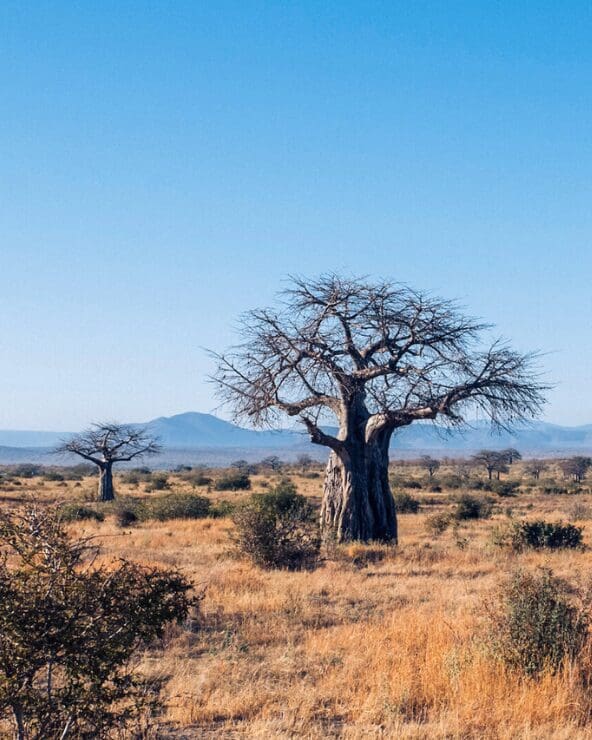
Tarangire's rolling hills, baobab trees, and dry river valleys make it an excellent backdrop for day walks. Walking here allows you to explore elephant paths and watch herds gather at the Tarangire River from safe high ridges.
Practical Logistics: Age, Fitness, & Packing
To participate in a walking safari, guests must meet specific physical and equipment requirements:
- Age Restrictions: For safety, children under 12 years old are strictly prohibited from walking in parks containing dangerous game. Some operators limit walks to travelers aged 15 or 16 and older.
- Physical Fitness: Day walks are slow-paced and educational, requiring only moderate fitness. Multi-day fly-camping treks require good stamina to cover 10 to 15 kilometers daily in hot weather.
- The Dress Code: You must wear neutral, earth-toned clothing (khaki, beige, olive green). Avoid bright colors (which startle wildlife) and dark blue or black (which attract biting tsetse flies).
- Essential Gear: Sturdy, broken-in walking boots with ankle support, a wide-brimmed hat, insect repellent, binoculars, and a refillable water bottle.
Embark on the Footpath with Adhimu Safaris
Walking safaris require meticulous planning, including park permits and ranger bookings. When you plan your journey through Adhimu Safaris, we manage all licenses and ranger bookings seamlessly. Your naturalist guide will guide you step-by-step through the African wild.
Irene Massawe
Travel Writer
Based in the heart of Tanzania, Irene is a travel writer who believes the best stories are found off the beaten path. Her work has helped countless readers navigate the realities and rewards of adventure travel. She is currently working on a comprehensive guidebook to East Africa’s hidden trails and spends weekends exploring the landscapes just beyond Arusha
Embark on this Journey
Write Your Own Story
Speak directly with our safari architects to tailor your private expedition across East Africa.